
Florida Construction News staff writer
The U.S. civil infrastructure market expanded in the third quarter of 2026 as project pipelines refilled, though contractors face intensifying pressure from rising material costs and a looming shortage of seasoned leadership, according to a new industry report.
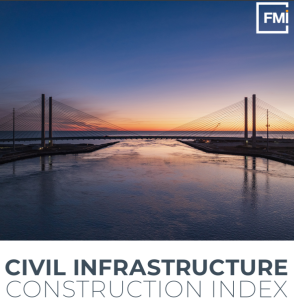
The Civil Infrastructure Construction Index (CICI), published by consulting and investment banking firm FMI, rose to 52.3 in the third quarter, up from 50.1 in the second quarter. A score above 50 indicates market expansion. The report, authored by FMI’s Brian Moore, Emily Beardall, and Brian Strawberry, noted that six of the index’s nine components improved over the previous quarter.
Contractors reported a sharp recovery in their book-to-burn rates, which jumped to 57.4 from 48.9, signaling that firms are once again replenishing their project backlogs at a healthy pace. Firm-level business confidence also reached 59.1, marking its highest point in the current economic cycle.
However, the cost of executing these projects is growing steeper.
- Material costs: The materials index dropped to 18.9 from 25 in the second quarter, driven largely by tariff activity on key inputs like steel and aluminum.
- Labor pressures: The labor index slipped to 21.7 from 23.9, its lowest reading in the current cycle, reflecting pervasive wage pressures and workforce shortages.
- Economic outlook: The overall U.S. economy index fell to 45.5, its weakest reading of this cycle, as contractors remain wary of inflation and trade policy uncertainty.
“No respondents reported substantial growth in year-over-year margins, and competitive intensity stayed elevated,” the report’s authors noted, emphasizing that profitability is currently caught between input costs and a competitive bidding environment. Roughly 80% of firms reported an increase in competition.
While long-term forecasts remain highly positive—particularly for transportation construction, which is projected to grow from an estimated $71.5 billion in 2025 to roughly $91.8 billion by 2030—industry experts warn that a lack of management depth could hinder future progress.
With immediate demand pressures easing slightly, firms are increasingly focused on succession planning and whether they have the leadership bench to execute future projects. The FMI report found a stark divide in industry readiness based on internal training initiatives:
- Approximately 70% of firms running formal, identifiable emerging-leader cohorts described their leadership bench as ready or nearly ready.
- In contrast, only about 32% of firms without such formal programs reported the same level of readiness.
The firms that treat the next few years as a window to develop and seat their next leadership tier will be best positioned for the late-decade acceleration in infrastructure spending, the report concluded.
